This article describes the process of setting up the first nursery for growing the seedlings for the live fence, the wigo.
Nursery site selection
Farmer were trained to select nursery site basing on the following criteria:-
- It should have enough space to easy nursery management
- The area for nursery establishment should have partial shade. (To avoid direct sun light as it will cause evapotranspiration and drying of seedlings which have not yet establish root system to withstand shortages of water)
- It should be close to clean water source
- Nursery cites should be fenced against thieves and destructive animals
- It should avoid water logged and steep slopes areas
- The site should be accessible
- Previous land use should be chemical free
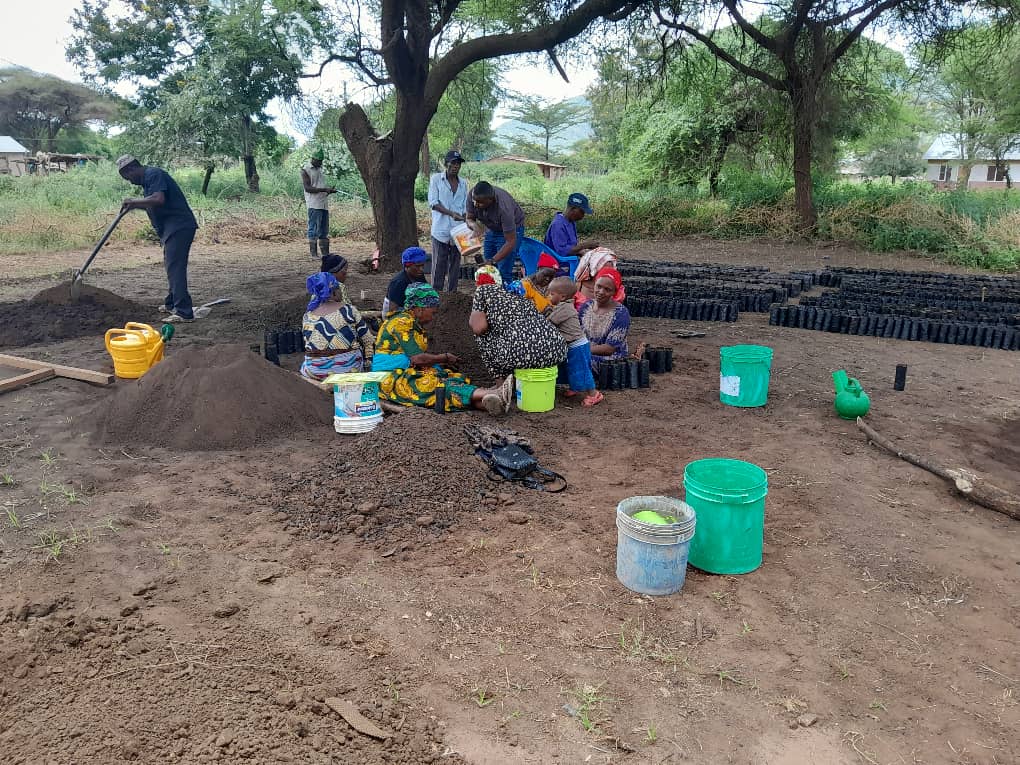
Soil types, mixing soil, filling seed bags
Farmers were taught that a correct soil that can be used as one of the potting mixture is top forest soil which contains lots of mycorrhiza and organic matter. This type of soil is available in the environment where farmers live. Also, they were taught three types of soil which were loam, clay and sand and their characteristics. They were also trained how to identify their soil type by making moist ball of soil by hand and the results were as follows; if you release the ball and particles are small, then the soil is sand; if particle are medium, it is loam; and if the particles are large, it is clay soil.
Soil ratio
Farmers were trained to prepare potting mixture basing on 3.1.1 ratio, three parts of top forest soil (for supplying organic matters), one part sand (To allow water penetration and soil aeration) and one part animal manure (To supply organic matters) respectively.
Pot sizing and filling
Farmers were taught to size pots of 15cm by using a piece of hard box sized in 15cm. The polytube was rolled around the box and was cut by using sharp knife. Pot filling were done by using hands (The first portion 7cm of the soil in the polytube were compacted to contain the soil in the tube as well as to easy relocation of poly bags in the nursery area).
Estimation of kilograms of polythene tubes
1kg of polytube gives 400 seedbags, it was budgeted that each farmer gets 2000 bags. 127 farmers x 2000 bags=254,000 seedbags.
Estimation of kilograms of seeds
Gliricidia seeds bought 10kg (1kg = 7,000 seeds) = 70,000 seeds
Leucaena seeds bought 10kg (1kg = 7,000 seeds) = 70,000 seeds
Acacia seeds bought 2 x 13 kg (1kg = 10,000 seeds) = 260,000 seeds
Seeds germination and treatment
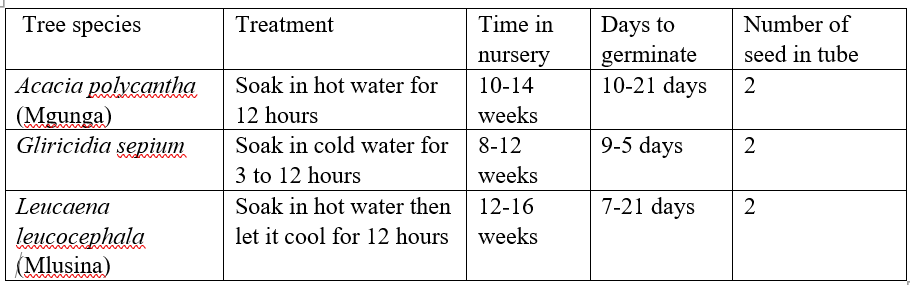
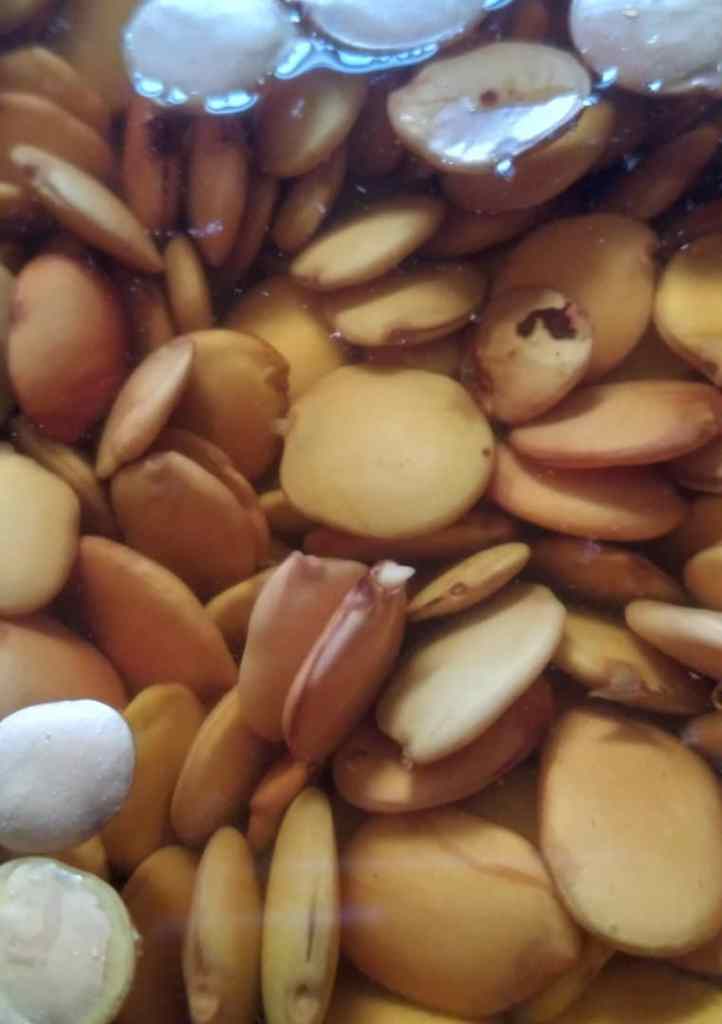
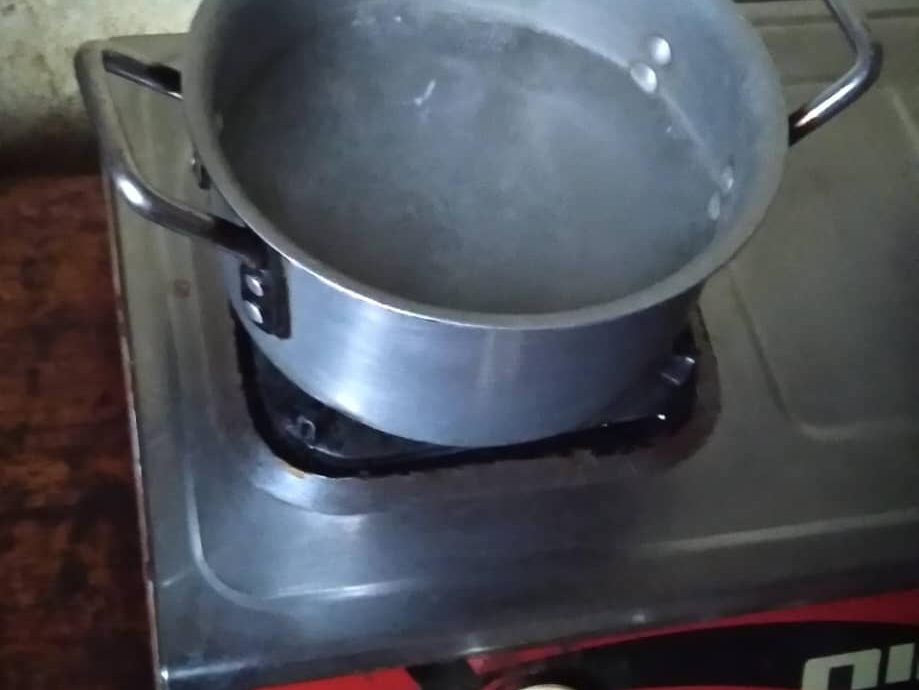
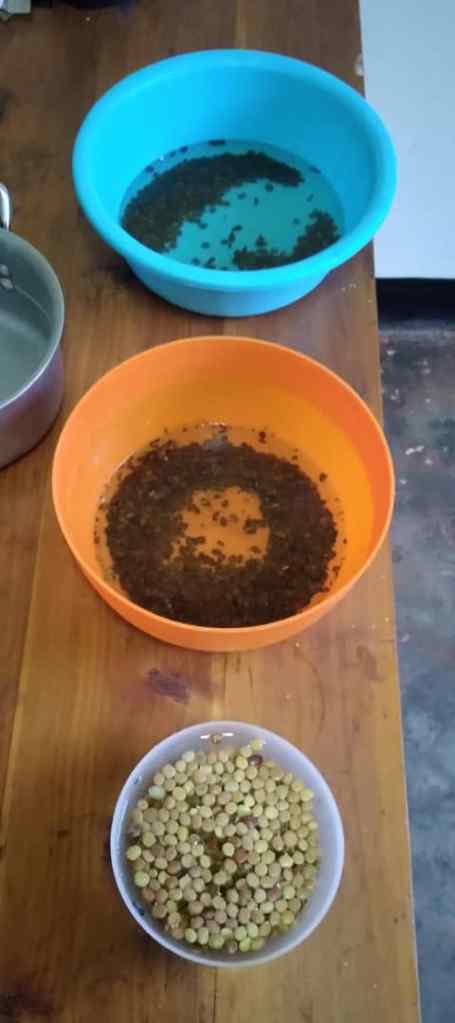
How to take care of a tree nursery?
Watering
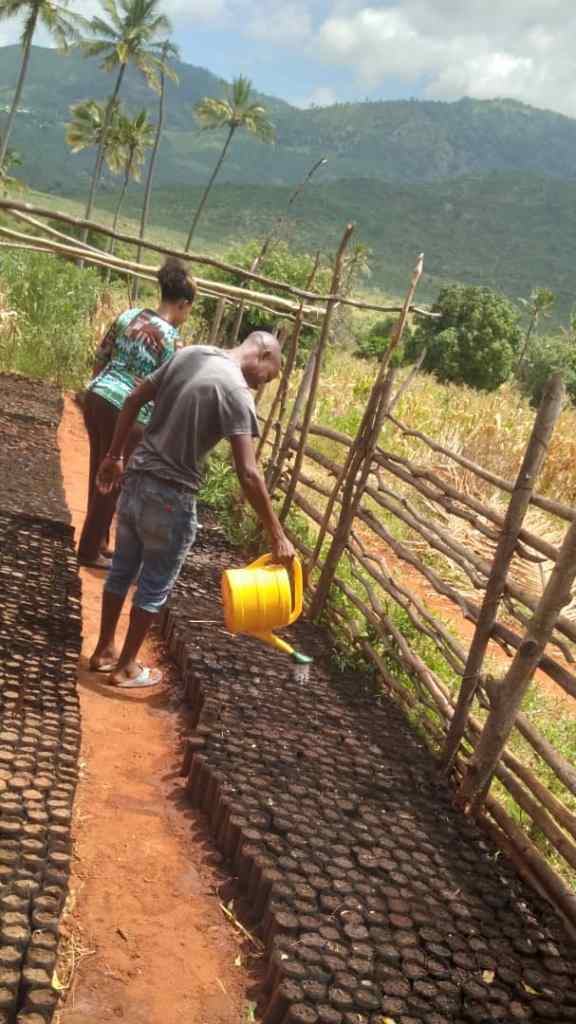
Farmers were taught to water tree seedlings two times a day morning and evening by using fine perforated water cans.
Weeding
Farmers were guided on how to remove competing weeds from nursery bed by hand picking in order to remove competition of nutrients and water.
Root pruning /Wrenching
Farmers were taught to cut actively growing roots of the seedlings so as to avoid the roots of the seeds inter- twining , to enable the seedlings to develop a well-established root system fit for easy establishment in the field and for seedlings not to penetrate in to the soil and get establish within the nursery sites.
Requirements for thatching
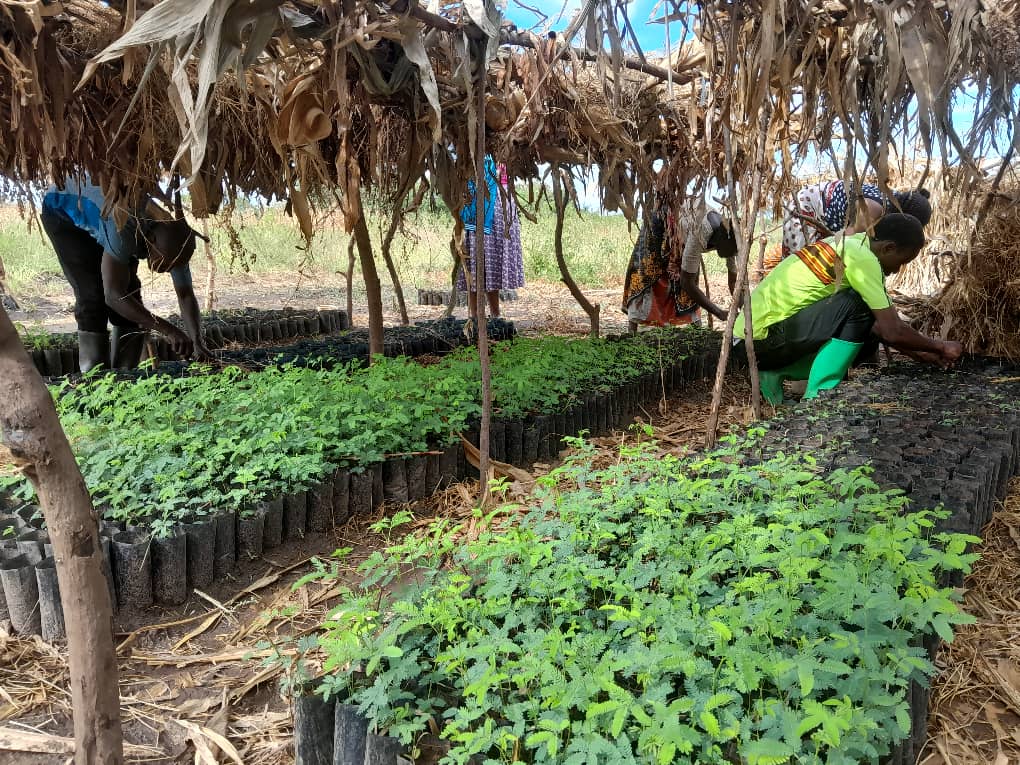
Germinating seed and recently transplanted seedlings need protection from hot sun, heavy rain and hard frost. Therefore some method of shading beds in nurseries is essential. Shading reduces the temperature of the soil and the amount of water lost by seedlings. Farmers were trained to shade their nursery by making of small roof of dry grasses supported by poles around nursery area.
Hardening before outplanting
It is necessary to harden seedlings before outplanting so that they get used to harsher conditions (meaning less moisture and hotter sun).
About two weeks before outplanting you reduce watering and demolish the thatch over your nursery.
 Blog for Forest Gardens in Mwanga, Tanzania
Leave a Reply