
Outplanting Acacial polycantha, Gliricidia sepium and Leucaena leucocephala seedlings on the boundaries of a farm is time to happen right at the start of the rainy season, when the first rains have soaked the ground. However, preparations need to start beforehand.
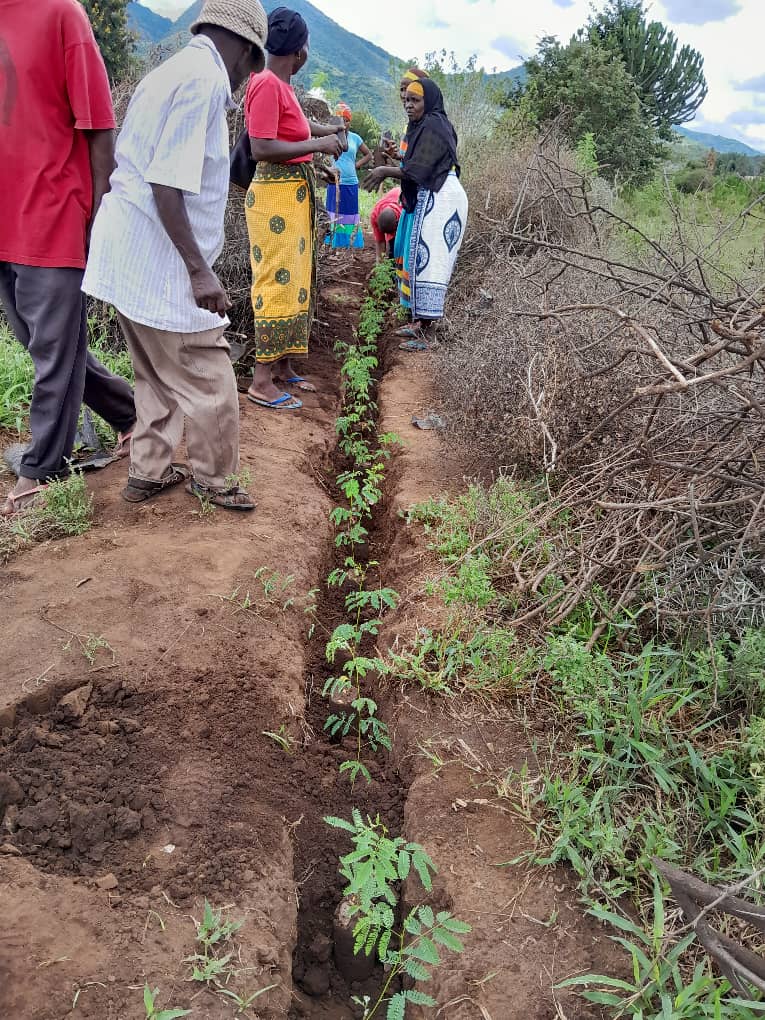


These are the steps to outplant seedlings on the farm borders:
- Protect the farm by a dead fence so that the seedlings to be planted on the boundaries are safe when they are young. All three species are palatable fodder to livestock and seedlings can be seriously damaged by goats, sheep and cows. When the trees grow, this is not so significant. The live fence takes over from the dead fence as the protective barrier against any species trespassing.
- Measure straight lines about half a meter inside the boundary by using a rope/string and pegs.
- Dig three trenches along the line so that the total width of the triple-row live fence remains one meter. Trenches are 1 foot (30cm) deep. Keep the topsoil nicely heaped on the farm-side of the trenches, so that you can return it into the trenches when you outplant your seedlings.
- Wait for the rains to start.
- After the first rain onwards, transport seedlings in batches that you can plant immediately during the same day. Preferably outplant in the mornings and evenings when it is cooler.
- Return approximately 10 cm of the topsoil on the bottom of the trench to provide soft and fertile soil for the roots to start penetrating. Mix in manure if the soil is poor and if you have it. The species selected are hardy and do not often need it.
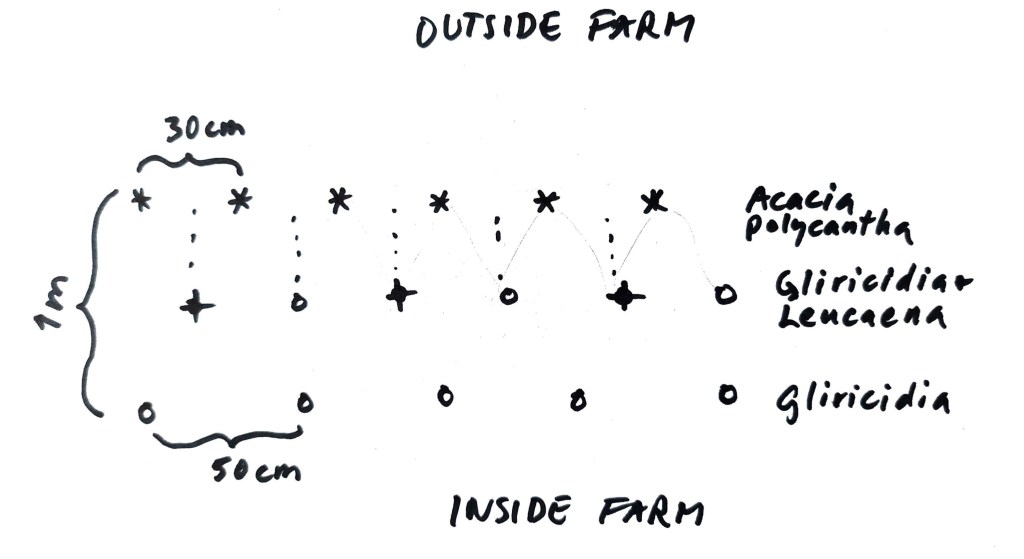
- Place the Acacia seedlings in the outer trench 1 foot apart. Cut long roots. If you leave some roots, do not bend them under the seedling.
- Peel the polythen tube by cutting it top to bottom by a razor.
- Fill in the remaining topsoil, leaving a small basin for water to collect. 1 foot (30cm) deep trench has 10cm topsoil on the bottom, 15cm seedbag depth and 5 cm deep basin.
- Plant the middle row, Leucaena and Gliricidia seedlings alternately, 1 foot apart. Remember to place them so that the seedlings in the middle row form a staggered line with the Acacia seedlings of the outer row (see below picture). This makes sure the base of the fence become dense. Do as above (fill in soft topsoil, place the seedlings, peel the seedbag and fill in the rest of the soil leaving a basin).
- Plant the inner row with Gliricidia only, 50cm (half a meter) apart.
Live fence expected to grow rainfed
As outplanting is done early into the rainy season, we do not expect to water these seedlings. However, if the rains stop early, watering may be required to keep the seedlings alive.
Upandaji wa miti
(kutoka Kijitabu cha Mkulima, Mwaka wa kwanza, Trees for the Future)
Upandaji miti katika bustani msitu yako ni wakati mhimu sana, utatakiwa kuwa makini.
Hii itaonyesha namna miti itayo kuwa imepandwa kwenye bustani msitu itapona kwa
kiwango gani.
Kabla kupanda
Weka wigo wa matawi makavu ya miti kuzunguka shamba lako ili kulinda miti utakayo panda dhidi ya wanyama.
- Acha nafasi ya mita 1/2 kati ya uzio huu wa matawi makavu na wigo hai.
Maandalizi ya miche kabla ya kupanda (Hardening Off)
- Mwezi mmoja kabla ya kuhamisha miti yako izoeshe kwa kupunguza umwagiliaji maji na kuvuli. Taratibu punguza kivuli kila wiki, baada ya mwezi mmoja acha miche iwe kwenye jua muda wote. Punguza kiwango cha maji na siku za kumwagilia kutoka siku moja hadi siku tatu. Hamisha miche ambayo imekaa kwa wiki moja bila kumwagiliwa.
- Lakini kwa kupanda, mwagilia ili kufanya udongo unyevu ili udongo ushikamane karibu na mizizi!
Wakati Wa Kupanda
- Panda miti yako mwanzoni mwa msimu wa mvua, baada ya mvua kubwa tatu au zaidi kunyesha!
Nafasi kati ya mti na mti msitari na mstari
- Tumia viungo vya mwili wako kupata nafasi hizo.
- Nafasi kati ya mti na mti ya miti ya marejea/inayorutubisha udongo
- Wigo hai na miti ya marejea mara zote hupandwa kwa kubananishwa sana.
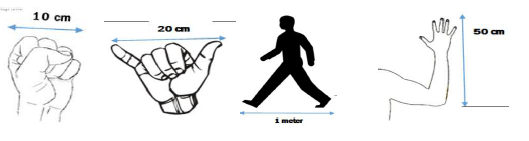
Upandaji wa miti: Miti ya kwenye viriba
- Andaa mitaro ya kupanda miti yako kabla ya upandaji wenyewe.
Mtaro wa futi moja upana na futi moja kina. - Mwagilia miche vizuri kabla ya kuhamisha/kuitoa kwenye kitalu.
- Safirisha miche kwa uangalifu na safirisha miche inayotosha kupanda siku hiyo tu.
- Toa kiriba kwa uangalifu na taratibu ili udongo usivunje kutoka kwenye mizizi.
Tumia kisu kikali au wembe. (Ikiwezekana, toa miche pamoja na udongo wake bila
kukata kiriba. Kama udongo ukikaa pamoja bila kutawanyika, unabaki na kiriba
kinachoweza kutumia upya. Ikiwa udongo haubaki pamoja, usitumie njia hii.) - Ikiwezekana changanya samadi au mboji kwenye udongo. Lazima iwe kavu sana ili
isichome mizizi. Ikiwa haijakauka kabisa, weka samadi juu baadaye, na kufunika na
matandazo. - Rudisha baadhi ya udongo (cm 5-10) uliochimba (au mchanganyiko wa udongo na
samadi) kwenye mtaro ili mizizi iwe na udongo laini chini yao ili kupenya vizuri. - Weka miche kwenye shimo. Mizizi inaweza kuwa mara mbili ya urefu wa kiriba,
lakini usiiruhusu ikunje unapopanda. Shikilia miche juu wakati wa kujaza udongo.
Nyosha mizizi kuelekea chini ya shimo. Kama mizizi ni mrefu kuliko mara mbili
urefu wa kiriba, kata mizizi kwa kutumia kisu kisafi chenye makali. - Rudishia udongo na hakikisha udongo hauvuki usawa wa eneo la mpaka wa shina na mizizi ya mche. Halafu shindilia kidogo ili kuondoa mifuko ya hewa, lakini usivunja udongo karibu na mizizi.
- Sawazisha mahali pa kupanda chini kidogo (cm 5 hivi) kuliko usawa wa ardhi unaozunguka ili uweze kumwagilia miche kwa urahisi na maji yasitoke mbali.
- Baada ya kupanda, ikiwa inawezekana, mwagilia miche, isipokuwa mvua imenyesha na udongo ni unyevu sana.
- Angalia hali ya miche kila siku. Mvua ikiacha mapema au hainyeshi vya kutosha, au unaona miche ikinyauka, mwagilia miche mara moja kwa wiki, lita 3-5 kwa kila mche.
- Baada ya kupanda, sanya viriba katika sehemu moja ili taka za plastiki zisitawanywe kila mahali.
 Blog for Forest Gardens in Mwanga, Tanzania
Leave a Reply