By Julius Mariki
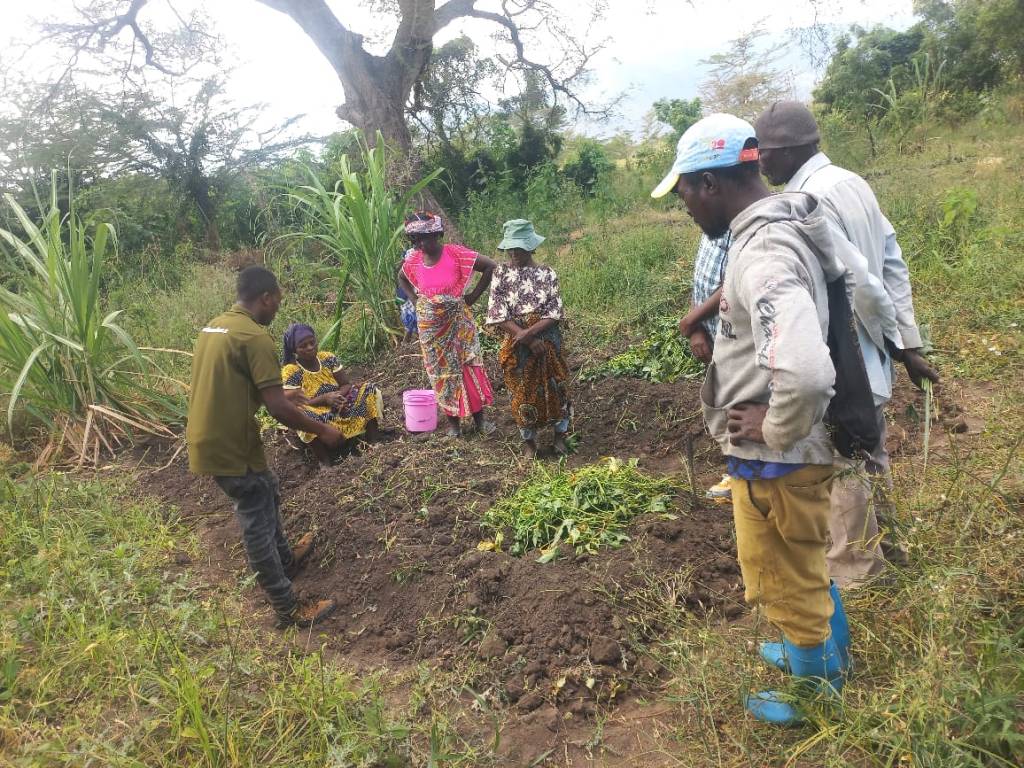
Sweet potatoes (viazi lishe, orange-fleshed sweet potatoes) were planted immediately after the rains stopped in early June to avoid too much moisture that makes the vines rot. Planting material was sourced from Siha and Hai districts. This is what we taught:
Why this project introduces viazi lishe?
- Current diet does not provide all nutrients that the body needs.
- Farmers need more food crops to provide food security: If one crop fails another provides an alternative food source.
Both tubers and leaves provide nutrient-rich food
- High level of vitamin A; (orange ones have 727 micrograms/100g, white type has only 3 micrograms of vitamin A)
- Consequences of vitamin A deficiency are: Poor child growth and development; Increased risk and severity of infection (vitamin A strengthens immunity towards diseases)
- Eye related problems (blindness)
- High fiber content; good for digestion health
- Leaves have high levels of vitamin A, B, C, and calcium and antioxidants (antioxidants protect the body against aging and sicknesses)
Soil requirements
- Sweet potatoes thrive in loamy soil that allows water to penetrate easily. Clay and gravelly soils are not suitable as they prevent roots from penetrating and expanding.
- Sufficiently fertile soil; apply compost manure; however, high amount of nitrogen leads to more leave growth; potassium is important to tuber growth.
- Ph requirement: 5.5 – 6.5

How to plant viazi lishe
Select the site:
- easy to reach every day
- soil requirements, see above
- sunny and not too wet place (remember that tubers decay in too wet soil; that is why they are planted in the dry season)
Prepare the bed:
- Slash and uproot the stumps if there are any in the field
- Plow the soil well using a hand hoe
Prepare the ridges: The distance from ridge to ridge is 100 cm; Plant to plant is 15 cm; The length of ridges is 40-60 m
Various ways of producing sweet potato seeds
- The use of sprouts or marando (vines) is the main method most used for planting or
- Roots and small potatoes planted in the nursery can produce shoots
Planting of sweet potatoes
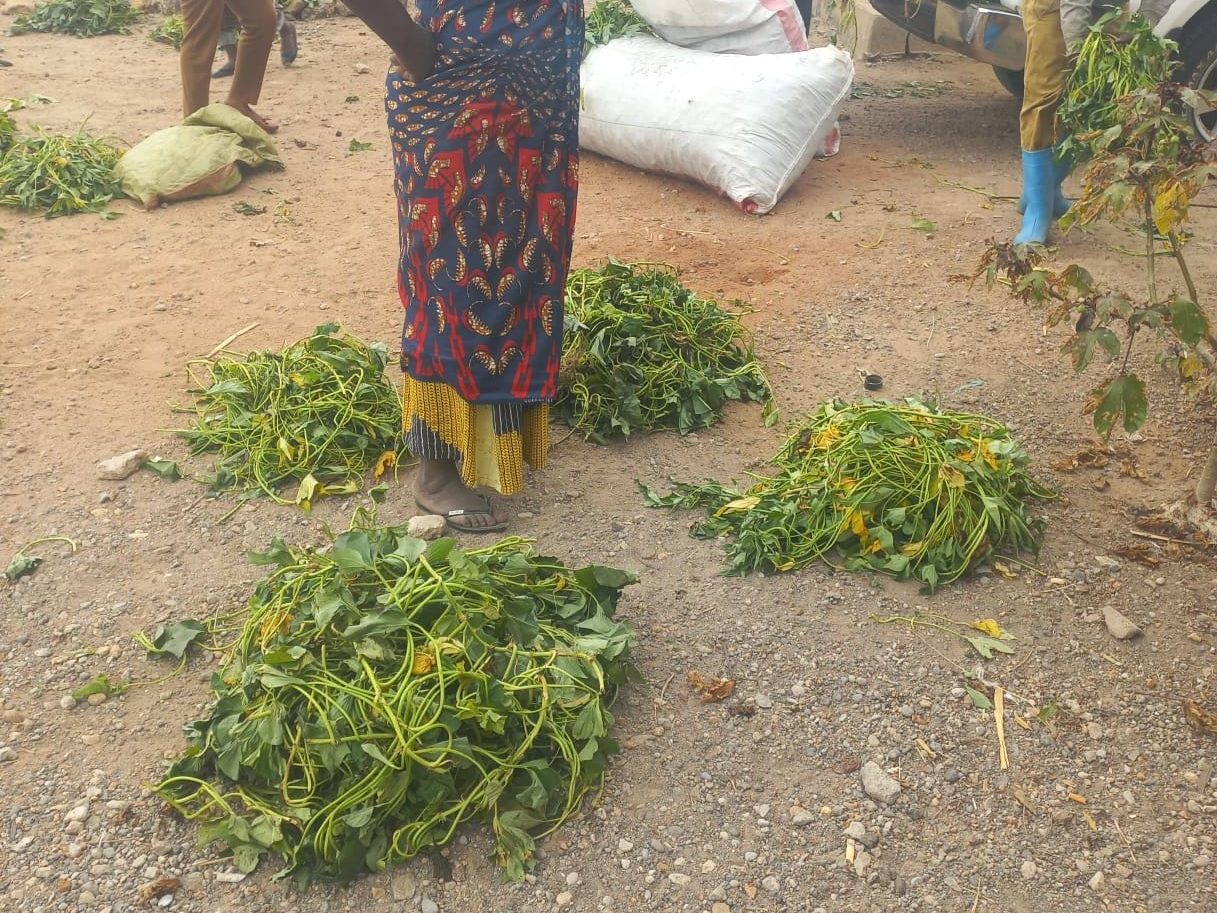
Sweet potatoes are planted using pieces of ‘creeping stems’ or vines that are between 2 to 3 months old. Proper planting involves placing most of the stem in the ground, and covering by little soil.
How to care
- Weeding should be done 2-3 times per season to prevent weeds that cause the yield to be below standard
- Returning the soil to the stems during weeding increases the yield, cover all soil cracks in the field to prevent insects that can enter and affect the quality of the potatoes
Diseases, insects and pests
- Sweet potatoes are susceptible to viral diseases such as Sweet Potato Chlorotic Stunt Virus (SPCV), fungus, neck rot, knotworm and brown rot.
- Insects that attack leaves include mealybugs, grasshoppers, caterpillars and beetles
- Insects that attack roots include weevils, cockroaches. The latter causes holes that are found in sweet potatoes in the field before harvest
- Pests are such as mice, rats, moles and ngedere
General pest control methods
- Crop rotation
- Sow good seeds
- Plant on time, and weed timely
- Use natural medicine to protect against insects
Harvesting sweet potatoes
- Sweet potatoes mature 4-5 months after planting
- Potatoes are harvested using a hand plow by digging and uprooting the whole stem or removing some of the potatoes and leaving the stem to continue in the field
- Harvest carefully to avoid bruises and injuries because injuries cause potatoes to spoil quickly
Storage
Separate the potatoes into two groups, whole and damaged. Only whole potatoes can be stored.
Health benefits
The high nutritional value in the roots and leaves have important health benefits (better nutrition than corn porridge for young children as complementary food for breastfeeding; and for adults who have other health problems.
- reduce the risk of cancer (vitamins A, B, C, and antioxidants)
- support digestive health (diabetes)
- help control diabetes if they are boiled (not good if they are fried, or like breads made from flour because they raise the sugar level quickly after eating)
- improve eye health (vitamin A)
- strengthening the body’s immunity (vitamins A, B, C, and antioxidants)
 Blog for Forest Gardens in Mwanga, Tanzania
Leave a Reply