By Gladness Kaaya
We have three villages in the project with an elephant problem. Elephants wandered into farmers’ fields in search of food, leading to significant damage to crops and property. This human-wildlife conflict poses challenges for local farmers, who rely on these crops for their livelihoods.


Elephants consumed the leaves of the acacia trees but left the Gliricidia trees untouched, as shown in the picture below.

To address this, we implemented an elephant deterrent activity using a chili fence for farmers involved in the Forest Garden project (source: Mara project, maraelephantproject.org). The aim was to introduce a non-invasive method that utilises elephants’ natural aversion to chili, helping to protect the farms sustainably and reduce the need for physical barriers or confrontations.
The chili fence approach uses sisal rope soaked in a mixture of chili with spent engine oil to create a barrier that discourages elephants from entering the area. Elephants have a highly sensitive sense of smell, and chili powder’s pungent aroma is unpleasant to them, making it an ideal, non-invasive deterrent. The chili fences work day and night, reducing the need for constant monitoring and allowing farmers to rest.
This method has shown success in various regions, including near Mikumi and Tarangire National Parks, and can be effective if set up and maintained properly during key times, such as the harvest season when elephants are most likely to seek food on farms.
Materials needed
For fencing one acre of crops, the following materials are needed:
- 10 litres of used engine oil, which helps bind the chili powder and ensures its lasting effect
- 2.5 kg of crushed chili powder, which provides the strong scent that repels elephants
- 32 pieces of mutton cloths or rags (each 2 x 1.5 feet), which are soaked in the chili-oil mixture and hung between the strands of sisal rope
- 5 kg of sisal rope, used to create two or three strands of the main fence
- 36 wooden poles, each about 3 meters long and 2-3 inches thick, which are used to support the fence structure and must be strong enough to withstand knocks from elephants.

Preparation Process and Implementation

Placing and Setting the Poles: First, choose strong, durable wooden poles that are at least 3 meters long and 2–3 inches in diameter. Space the poles about 7–10 meters apart, ensuring they are firmly anchored in the ground (about 0.5 meters deep) to provide stability. Add rocks or stakes for extra security, especially to prevent them from being knocked over by elephants or cattle. Ensure that the poles are positioned at least 4 meters away from the crops, with a buffer zone, such as chili plants, around the crops for added protection.

Crushing the Chili and Mixing with Oil: Crush chili peppers into a coarse powder or fine particles (for undried chill), approximately 2.5 kg.
Then, mix crushed chili with 10 litres of used engine oil, stirring thoroughly to create a thick, oily mixture. This mix will be used to coat the sisal ropes and cloths to create the deterrent effect.
Soaking the Sisal Ropes and Cloths: Soak the sisal ropes and mutton cloths (or rags) in the chili-oil mixture. Ensure that both the ropes and cloths are thoroughly saturated to make the fence effective at repelling elephants.
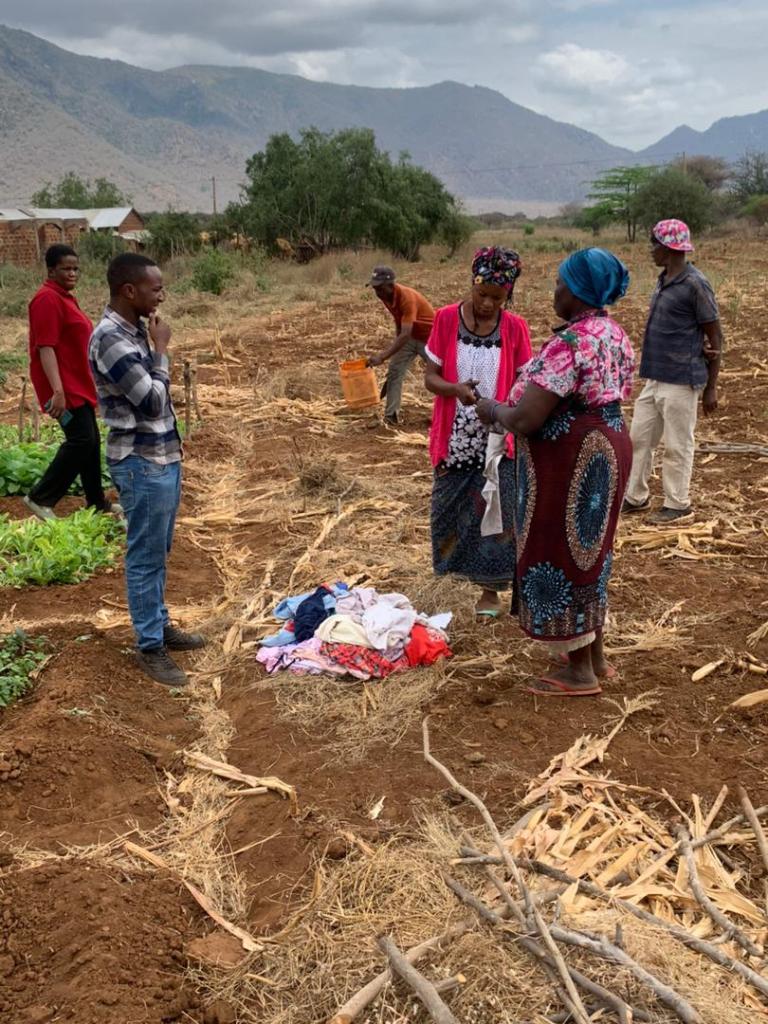

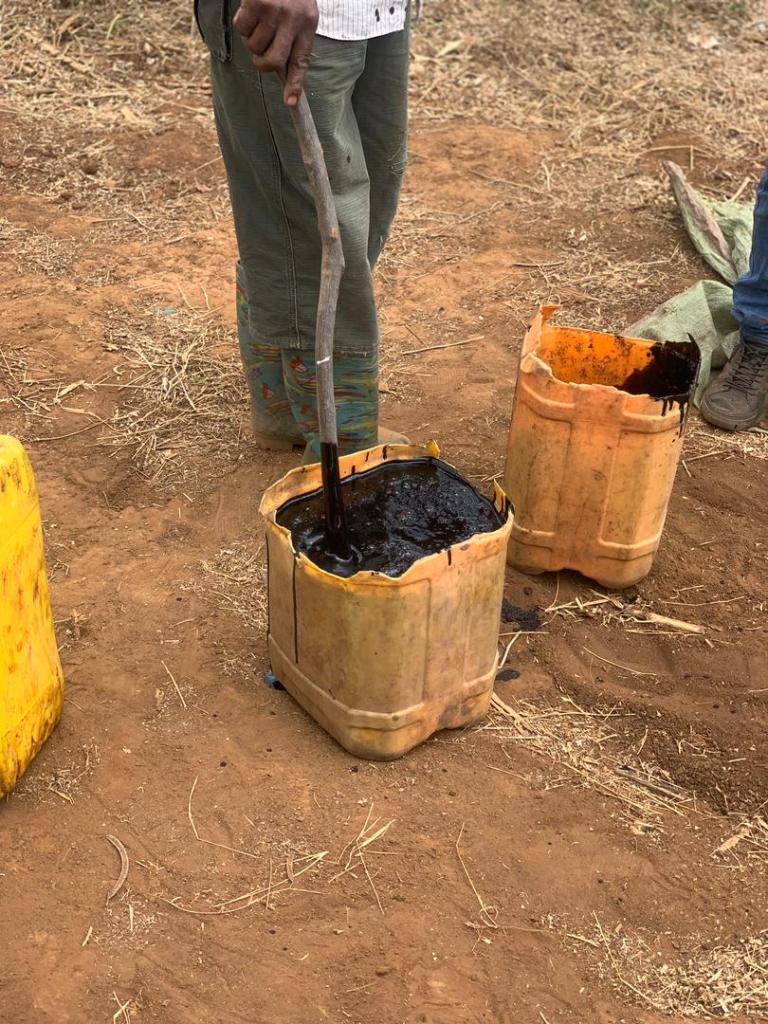

Stringing the Oiled Sisal Rope Along the Poles: Tie the soaked sisal ropes along the poles, ensuring that the lower strand is placed 1.5–2 meters above the ground and the upper strand is at 2.5 meters. For additional deterrence, especially for young elephants, consider adding a third strand about 1 meter above the ground. The fence should completely circle the crop area with no gaps.
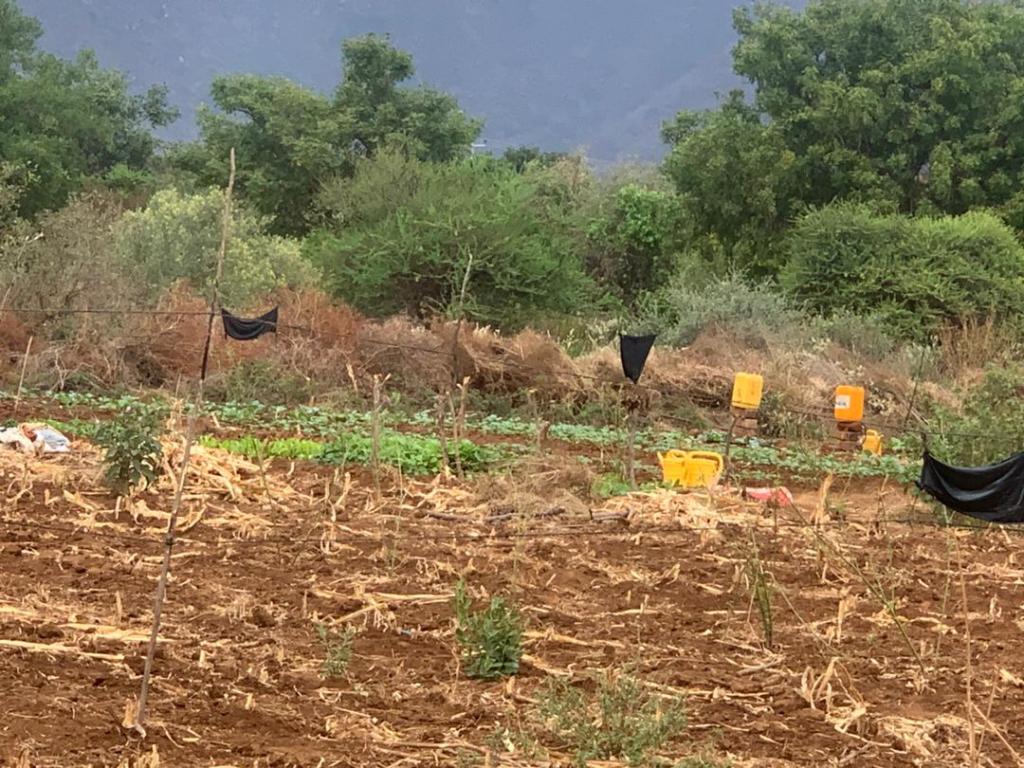
Tying the Oiled Cloths Between the Sisal Strings: Secure the soaked mutton cloths between the upper two strands of sisal rope. Place them evenly, ensuring that they are securely tied to avoid them falling off. The cloths will help spread the chili oil and enhance the scent’s effectiveness, making the fence a strong deterrent.
Observations and Outcomes
Feedback from farmers indicates that elephants passed near the chili-fenced areas but did not enter, highlighting the effectiveness of the chili fence in deterring them. This demonstrates that chili fences can significantly reduce elephant crop-raiding incidents, offering strong protection for both the crops and the Forest Garden areas.
In conclusion, the chili fence method has proven to be a practical and effective approach to mitigating human-elephant conflicts in agricultural areas. By deterring elephants from entering crop fields, this method helps protect farmers’ livelihoods and promotes sustainable coexistence with wildlife. The positive feedback from farmers further supports the fence’s effectiveness, making it a valuable, low-cost solution that can be locally maintained and managed.
 Blog for Forest Gardens in Mwanga, Tanzania