by Yahaya Jumanne
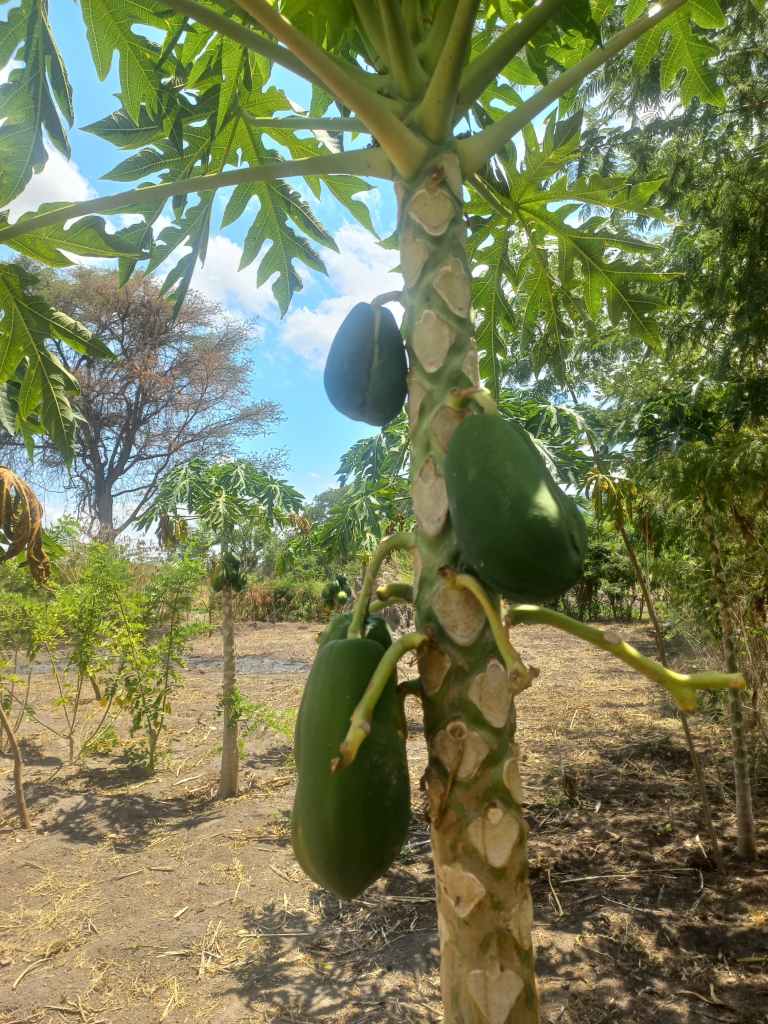
We provided farmer groups with high-yield papaya seeds, the MALKIA F1 hybrid variety known for its early fruiting capabilities. These seeds were planted in polythene bags within tree nurseries and seedlings outplanted in April, 2024. A fruit renowned for its nutritional richness and rapid growth, one stem bear more than 40 fruits at once, we lay the foundation for year-round access to vital nutrients.

At the end of the year, we conducted a focus group discussion with old groups, farmers shared their experiences and highlighted key benefits including successfully harvested their first yields, providing their households with a consistent supply of fresh, nutrient-rich papaya fruits. Papayas were a welcomed addition to daily diets, boosting health and well-being. Many farmers began selling surplus papayas in local markets. On average, they reported earning between 20,000tsh to 50,000tsh per harvest, with some reporting repeat two sales seasons within the year. This additional income helped cover essential household expenses and reinvestments into farming activities.

However, we also learned that some farmers experience serious issues with their papaya trees. It is expected that Malkia F1 should yield good harvests for about three years. These farmers noted a severe drop in production after 1.5 years only.
Is it the saltiness of the soil due to repeated flooding over decades, or simply lack of right nutrients and watering, we do not yet know. What we do know is that farmers have not replenished the fertility of the soils around the trees during the productive months, thus it is natural that the yields decrease.

Some details about planting and watering
Hole size: To grow healthy papaya, start by digging a hole about 60 cm deep and wide, mixing 1-2 buckets of well-rotted manure or compost into the soil to enrich it.

Bottle irrigation: For efficient watering, two methods of bottle drip irrigation can be used. In the first method, cut off the top of the bottle, place it near the plant, and fill it with water to let it slowly seep into the soil. The second method involves making small holes at both the top and bottom of the bottle, then placing it near the stem. The best bottle size is 1.5 liters. Water will drip slowly over one to two hours, keeping the soil consistently moist.

Mulching to keep the moisture: Additionally, applying mulch, such as straw, leaves, or grass clippings around the base of the plant, helps retain moisture, reduces evaporation, and ensures optimal hydration for healthy growth.
 Blog for Forest Gardens in Mwanga, Tanzania