by Yahaya Jumanne
1. Introduction
Live fences play a vital role in Forest Garden systems by protecting crops, preventing encroachment, and providing valuable resources like fodder, firewood, and mulch. Acacia polycantha is commonly used for live fencing due to its fast growth and resilience, and its pliant branching pattern, which readily lends itself to weaving into a dense green wall. A multi-row live fence can additionally include multipurpose trees. In the Forest Garden system used in Tanzania, these are typically Leucaena leucocephala and Gliricidia sepium. The quality and usefulness of a live fence depend on good management from the start. Unmanaged fences can overgrow, encroach on neighbors’ fields and reduce productivity. This manual presents a simple, proven method that combines early weaving and scheduled pruning to establish and maintain strong, dense and manageable live fences.

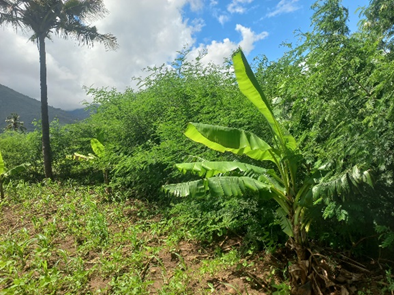
2. Establishment Phase (First 3 to 4 Months After Planting)
Step 1: Initial Pruning of Acacia (Apical Dominance Control)
3 to 4 months after planting (or when seedlings reach about 50 cm tall), cut off the vertical apex (main shoot tip). This stops vertical dominance and stimulates side branch growth, promoting bushiness and lateral expansion, ideal for weaving.
Step 2: Weaving Branches
Once lateral branches begin to grow (usually 1 to 2 months after topping), weave the new branches horizontally into nearby seedlings. Bending flexible young branches toward neighboring trees, coiling or twisting branches around others to form a tight, interlocked barrier. This process helps to create an impenetrable living wall with a woven barrier that marks boundaries clearly and strongly.

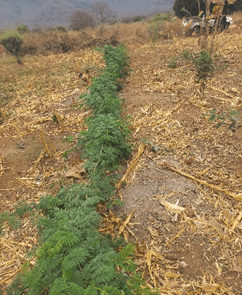
12 and 5 months of live fence with controlled apical dominance, precise weaving and coiled side branches forming a dense, resilient, and visually striking barrier.
3. Maintenance Phase (Seasonal Pruning and Utilization)
Step 3: Scheduled Pruning
First Pruning: Late March, one year after planting (start of long rains in Northern Tanzania).
Second Pruning: Late September (start of short rains).
Cut back trees at 70 to 150 cm height depending on intended use and height of a gardener. Pruning regularly prevents uncontrolled spread into neighboring plots, stimulates fresh growth and rejuvenates the fence, and also provides biomass for multiple uses including filling gaps and providing animal fodders (Gliricidia & Leucaena).
Important Notes:
– Always prune before flowering, especially for Leucaena, to avoid unwanted seed dispersal that can lead to field invasion.
– Start weaving Acacia while branches are still green and flexible, older branches may be difficult to bent.
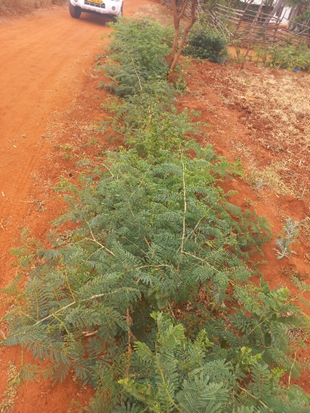

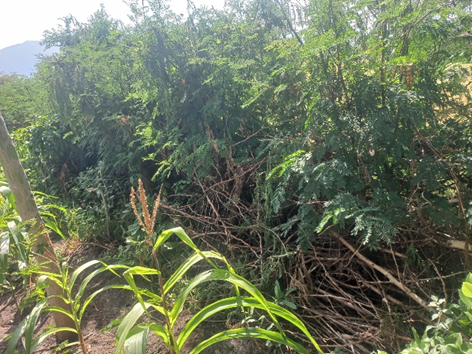
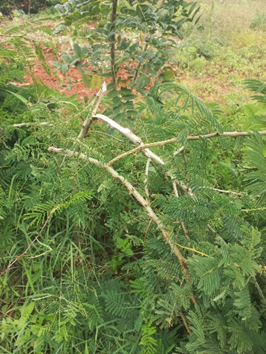
Lateral branches before and after weaving along the roadside.
 Blog for Forest Gardens in Mwanga, Tanzania