by Yahaya Jumanne
As part of our ongoing efforts to enhance biodiversity and sustainability, we have introduced Morus alba (white mulberry or Mandela) into our forest garden. This multipurpose tree plays a vital role in our agroforestry system, offering a range of benefits that align with our ecological and agricultural goals.
Why Morus alba?
- Biodiversity:
Morus alba supports a thriving ecosystem by attracting pollinators and other beneficial organisms. Its introduction enhances species diversity within the forest garden, contributing to a more resilient and self-sustaining environment. - Fodder Production:
Mulberry leaves are highly nutritious and serve as excellent fodder for livestock. By pruning the trees regularly to about 60 cm, we can ensure a consistent supply of fresh sprouts for this purpose. - Fruit Yield:
One tree in each farm is reserved for fruit production, offering a delicious and nutritious yield. Mulberries are rich in vitamins and antioxidants, providing additional value to our forest garden.
Implementation: From Nursery to Forest Garden
To establish Morus alba in the forest garden, we used vegetative cuttings sourced from a nursery. This method ensures a high success rate and faster establishment compared to seeds. Here’s an outline of our process:
1. Preparation of Nursery Cuttings:
- Selected healthy branches from mature mulberry trees.
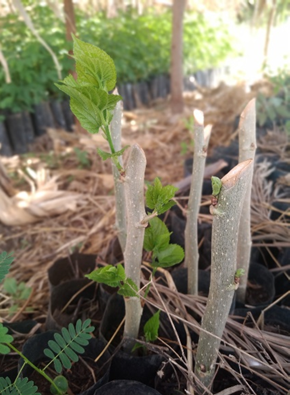
- Cuttings were about 20-30 cm long with at least 3 to 4 nodes.
- The lower end of each cutting was cut flat and the upper end slanted for easy identification during planting.

2. Pits Preparation for Transplanting:
- We chose a sunny area with good drainage for optimal growth.
- Rows were spaced 10 meters apart, with 1 or 1.5 meters between each pit in a row to allow adequate room for growth and management.
- Pits were dug to a size of 60 cm x 60 cm x 60 cm to ensure enough enough mixture of fertile soil.
- Each pit was filled with a mixture of topsoil, compost, and well-decomposed manure to enrich the planting medium.
3. Transplanting:
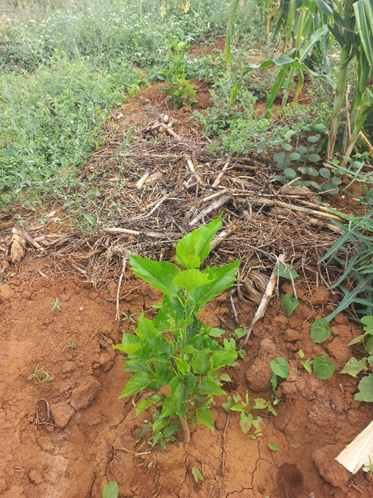
- The nursery cuttings were transplanted into the prepared pits during the early rainy season to reduce transplant shock and ensure better moisture availability.
- Light mulching was applied around the base of each cutting to retain soil moisture and suppress weeds.

Maintenance and Future Plans
Pruning and Fodder Collection:
To optimize fodder production, the trees are pruned when they reach about 2 m in height. The fresh sprouts are harvested and used as feed for livestock, ensuring a sustainable and renewable source of fodder.
Fruit Tree Management:
For the designated fruit-producing trees, pruning is minimized to promote flowering and fruiting. Careful monitoring ensures these trees receive sufficient nutrients for high-quality fruit production but do not produce maximum shade for other lower crops.
 Blog for Forest Gardens in Mwanga, Tanzania